
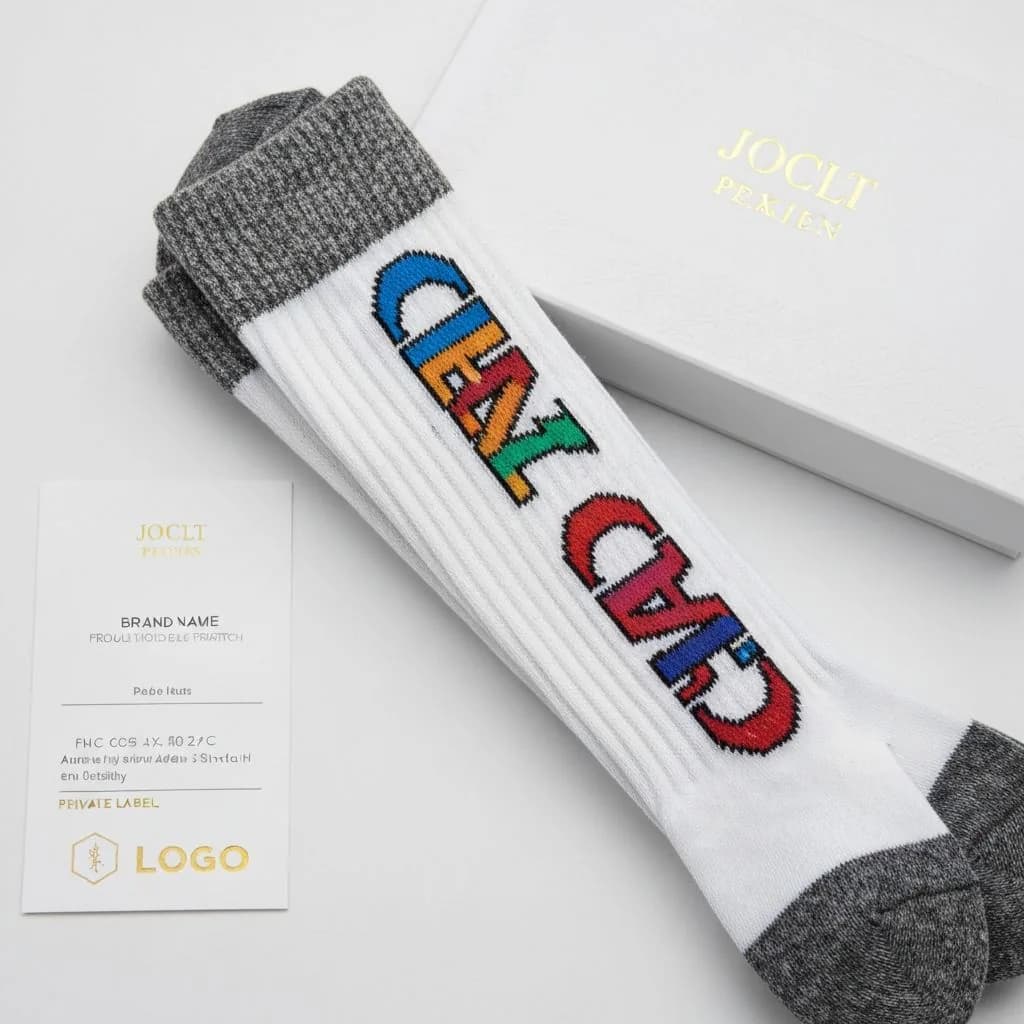
Private label sock manufacturing allows entrepreneurs, retailers, and established brands to create their own custom sock products without investing in production facilities. This comprehensive guide walks you through every step of the private label process, from initial concept to successful product launch.
What is Private Label Manufacturing?
Private label (also called OEM or white label) manufacturing is when a factory produces products that you sell under your own brand name. The manufacturer handles production while you control design, branding, marketing, and sales.
Why Choose Private Label Socks?
The sock industry offers unique advantages for private label entrepreneurs compared to other apparel categories.
Advantages
- Low MOQs compared to other apparel (100-500 pairs)
- High repeat purchase rate (consumable product)
- Compact size reduces shipping and storage costs
- Gender-neutral sizing simplifies inventory
- No fitting rooms needed for retail
- Strong margins (50-70% retail markup)
Considerations
- Competitive market requires differentiation
- Quality consistency crucial for brand reputation
- Initial sampling and setup costs
- Lead times of 4-8 weeks for production
- Need for ongoing inventory management
- Marketing investment required for brand building
Step 1: Define Your Brand Concept
Before contacting manufacturers, develop a clear vision for your sock brand. This foundation guides all subsequent decisions from product design to marketing strategy.
Target Market Identification
Successful sock brands typically focus on specific niches rather than trying to serve everyone:
- Athletic/Performance: Runners, hikers, gym enthusiasts
- Fashion/Lifestyle: Trendy designs, bold patterns, statement pieces
- Professional/Business: Dress socks, subtle branding, premium materials
- Specialty: Diabetic, compression, eco-friendly, novelty
- Industry-Specific: Healthcare workers, hospitality, construction
Brand Positioning
Define where your brand sits in the market:
- Price point: Budget ($5-10), mid-range ($12-20), premium ($25-50+)
- Value proposition: What makes your socks different?
- Brand personality: Fun, professional, eco-conscious, athletic?
- Distribution strategy: DTC, wholesale, retail, Amazon?
Step 2: Product Development
Work with your manufacturing partner to develop products that align with your brand vision and target market expectations.
Sock Style Selection
Choose sock styles based on your target market:
- No-show/Liner: Popular for casual wear, sneaker culture
- Ankle/Quarter: Athletic, everyday casual
- Crew: Versatile, good for branding visibility
- Knee-high: Sports, fashion, compression
- Over-the-calf: Dress, football, baseball
Material Specification
Material composition affects comfort, performance, cost, and positioning:
- Cotton-blend (70-80% cotton): Everyday comfort, budget-friendly
- Performance synthetic (polyester/nylon): Athletic, moisture-wicking
- Merino wool: Premium positioning, outdoor/hiking
- Bamboo: Eco-friendly, soft, antimicrobial
- Compression blends: Medical/athletic specialty
Design Elements
Determine the design features that differentiate your product:
- Color palette and patterns
- Logo placement and size
- Special features (cushioning, arch support, seamless toe)
- Size range and fit specifications
Step 3: Branding & Packaging
Your packaging is often the first physical touchpoint with customers. Invest in professional branding that reflects your brand positioning.
Logo Placement Options
- Woven into sock: Premium look, permanent, higher cost
- Embroidered: 3D effect, durable, mid-range cost
- Printed/sublimated: Full-color, cost-effective, limited to synthetics
- Heat transfer: Detailed logos, good durability, moderate cost
Packaging Options
- Poly bags: Most economical, works for basics and athletic
- Belly bands: Show the sock, eco-friendly, good for retail
- Header cards: Hang-tag display, retail-friendly
- Boxes: Premium feel, gift-ready, highest cost
- Kraft paper: Eco-conscious positioning
Labeling Requirements
Ensure your packaging meets legal requirements:
- Fiber content (material composition)
- Country of origin
- Care instructions
- Size information
- Brand name and contact information
Step 4: Finding the Right Manufacturer
Choosing the right manufacturing partner is crucial for product quality, reliability, and long-term business success.
Manufacturer Evaluation Criteria
- MOQ requirements: Align with your budget and sales projections
- Quality standards: Certifications, QC processes, sample quality
- Production capacity: Can they scale with your growth?
- Communication: Responsive, English proficiency, time zone compatibility
- Lead times: Production and shipping timelines
- Customization flexibility: Willingness to accommodate special requests
Questions to Ask Potential Manufacturers
- What is your minimum order quantity per style/color?
- Can you provide samples before bulk production?
- What certifications do your products carry?
- What is your typical production timeline?
- Do you offer design assistance?
- What are your payment terms?
- Can you provide references from existing clients?
Step 5: Sampling & Quality Control
Never skip the sampling phase. Pre-production samples verify that your specifications translate correctly into finished products.
Sample Evaluation Checklist
- Color accuracy vs. Pantone references
- Logo placement, size, and clarity
- Material feel and quality
- Fit and sizing across size range
- Construction quality (seams, heel, toe)
- Packaging appearance and functionality
Pro Tip: Wear Test Samples
Actually wear and wash your samples multiple times before approving production. This reveals issues with durability, fit after washing, and long-term comfort that aren't apparent from visual inspection alone.
Step 6: Production & Fulfillment
Typical Production Timeline
Total lead time: 6-12 weeks from order to delivery
Inventory Planning
Plan your initial order carefully:
- Start with your core styles (2-4 designs)
- Order conservative quantities initially
- Focus on size range your target market needs
- Plan reorder timing based on lead times
- Track sell-through rates to optimize future orders
Step 7: Launch & Marketing
With products in hand, focus on building brand awareness and driving sales.
Sales Channels
- E-commerce website: Highest margins, full brand control
- Amazon/marketplaces: Built-in traffic, competitive environment
- Wholesale to retailers: Volume sales, lower margins
- Specialty stores: Targeted customers, credibility
- Corporate/promotional: Bulk orders, B2B relationships
Marketing Strategies
- Social media presence (Instagram, TikTok for visual products)
- Influencer partnerships in your niche
- Content marketing (blog, SEO)
- Email marketing for repeat purchases
- Paid advertising (Facebook, Google, Amazon)
- Trade shows and industry events
Cost Breakdown Example
Here's a realistic cost breakdown for launching a private label sock brand:
| Expense Category | Estimated Cost | Notes |
|---|---|---|
| Samples (3-5 designs) | $100-300 | Often credited toward bulk order |
| Initial inventory (500 pairs) | $1,500-3,000 | Depends on sock type/quality |
| Packaging/labeling | $300-800 | Custom boxes cost more |
| Shipping (sea freight) | $200-500 | Air freight 3-4x higher |
| Branding/design | $200-1,000 | Logo, packaging design |
| E-commerce setup | $300-1,000 | Website, photography |
| Total Initial Investment | $2,600-6,600 | Excludes marketing spend |
Conclusion
Private label sock manufacturing offers a accessible entry point into the apparel industry with manageable startup costs and strong profit potential. Success requires clear brand positioning, quality products, reliable manufacturing partners, and consistent marketing efforts.
At VelonSocks, we specialize in private label sock manufacturing with low MOQs starting at 100 pairs per design. Our team provides design support, sampling, and flexible production to help new and established brands bring their vision to life. Contact us to discuss your private label sock project.