
Trend overview
Sustainable socks have moved from niche merchandising into a more serious product and sourcing category. Buyers are no longer looking only for an eco-friendly label. They want material credibility, certification support, packaging alignment, and a brand story that can hold up under scrutiny. That shift is changing how wholesale sock programs are developed and sold.
The demand signal is real, but buyers are becoming more selective
Sustainable socks are no longer sold on novelty alone. Retailers, distributors, and end consumers now expect the sustainability story to sit on top of a product that still performs, still fits a price architecture, and still feels commercially credible. That is why the category keeps growing even as buyer scrutiny gets tighter.
- Consumer awareness: Environmental concerns continue to influence purchase decisions across apparel and accessories.
- Retail differentiation: Sustainable sock lines give brands a clearer narrative than generic commodity basics.
- Assortment expansion: More buyers are treating eco-led programs as a line architecture decision, not a one-off seasonal experiment.
- Procurement pressure: Larger accounts increasingly ask for certification evidence before the line even reaches the merchandising stage.
In other words, the category opportunity is growing, but so is the standard for what counts as a credible sustainable product.
Understand the sustainable materials landscape before building the range
Sustainable sock programs can be built from very different material strategies, and each one tells a different commercial story. The right material depends on whether you are prioritizing accessibility, premium comfort, recycled-content messaging, or a stronger natural-fiber narrative.
Organic cotton
Organic cotton is still one of the easiest sustainable stories for consumers to understand. It works well when comfort, familiarity, and approachable eco positioning matter more than technical athletic performance.
Bamboo-based fibers
Bamboo has strong marketing appeal because it feels soft and looks eco-conscious on packaging. But buyers should still verify processing methods and certification support instead of treating bamboo as automatically sustainable.
Recycled polyester
Recycled polyester is often the most commercially practical sustainable athletic sock material. It gives brands an eco story without sacrificing the moisture management and cost logic that synthetic-led performance socks still depend on.
Hemp and merino
These options create stronger premium narratives. Hemp supports an agricultural sustainability story with high durability potential. Merino supports renewable and biodegradable positioning, especially in outdoor and comfort-led categories.
Certification strategy matters as much as the material itself
Without documentation, sustainability claims weaken quickly. Certifications give buyers a way to verify what the brand is actually saying about fiber content, chemical safety, or recycled sourcing. They are also a key defense against greenwashing concerns.
GOTS
Best used when the claim centers on certified organic textiles and a more complete supply-chain standard.
GRS
The key recycled-content credential for programs built around rPET or other recycled inputs.
OEKO-TEX Standard 100
Useful when the message also needs to reassure buyers about harmful-substance testing in the finished sock.
FSC and related forestry standards
Relevant when bamboo or other wood-based cellulosic inputs are central to the story.
If your line will lean hard into sustainability as a brand message, the certification roadmap should be part of the sourcing plan from the start, not added as a late-stage marketing layer.
Packaging and positioning now influence whether the eco story feels authentic
A sustainable sock line loses credibility quickly if the product story is paired with wasteful packaging or vague messaging. Buyers increasingly expect the packaging, hangtags, and claim language to support the material narrative instead of contradicting it.
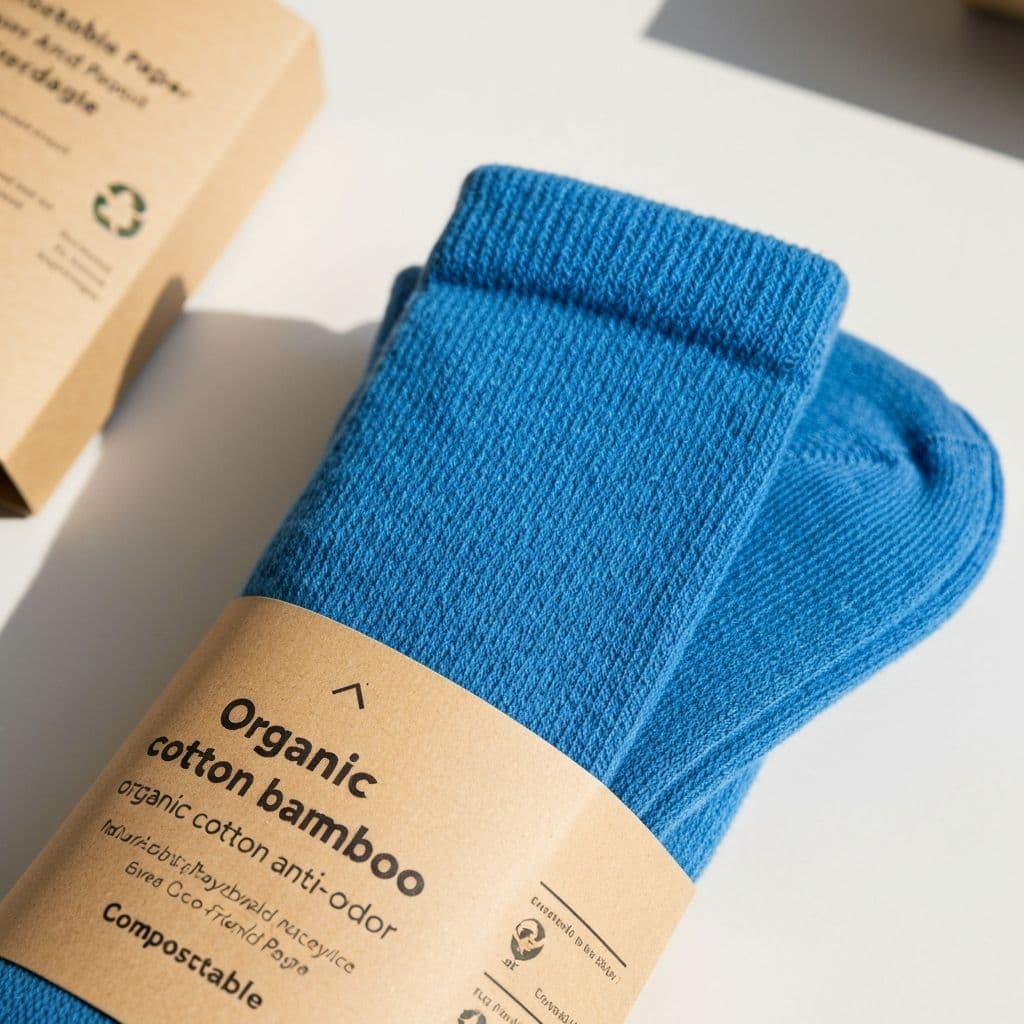
- Kraft paper bands and recycled cartons reinforce the eco message more effectively than conventional plastic-first presentation.
- Impact metrics can help if they are specific and documented, such as recycled content or packaging reduction.
- Minimal packaging is often stronger than decorative packaging when sustainability is part of the core brand story.
- Clear language is more credible than generic phrases like green, natural, or eco-friendly.
Sustainable positioning works best when it combines proof, clarity, and product quality instead of leaning on aesthetics alone.
Watch the sourcing risks behind sustainable programs
Sustainable sock programs create opportunity, but they also add sourcing complexity. Buyers should expect more moving parts than they would with a basic synthetic athletic line, especially when certification, specialty packaging, or niche natural fibers are involved.
- Higher MOQs: Specialty yarns and certified inputs may require larger or less flexible buys.
- Higher unit cost: Sustainable programs often carry a clear premium over commodity equivalents.
- Documentation burden: Claim support, transaction certificates, and chain-of-custody detail may be required by downstream buyers.
- Marketing risk: Weakly substantiated claims can create brand damage if buyers challenge them.
The solution is not to avoid the category. It is to source and message it more carefully than standard commodity socks.
Future outlook: the next stage is more traceable, more technical, and less vague
Sustainable socks will likely keep moving toward more verifiable and technically informed programs. Buyers are already paying closer attention to traceability, circularity, recycled-content verification, and the way a material claim fits real performance expectations.
- Bio-based synthetics may become more commercially relevant as alternatives to petroleum-led inputs improve.
- Circularity programs will matter more once brands start exploring take-back or material recovery models.
- Carbon visibility may become a more common requirement as retailers ask for clearer impact reporting.
- Stronger traceability will increasingly separate serious sustainable programs from marketing-first ones.
For now, the strongest wholesale strategy is still straightforward: pick a material story that fits the product, support it with the right certification path, and make sure packaging and claims are coherent from the first sample onward.
If you want to go deeper into sourcing-side sustainability details, compare this page with our sustainable production guide and review our certifications overview. Those pages help turn market interest into a more practical product brief.