
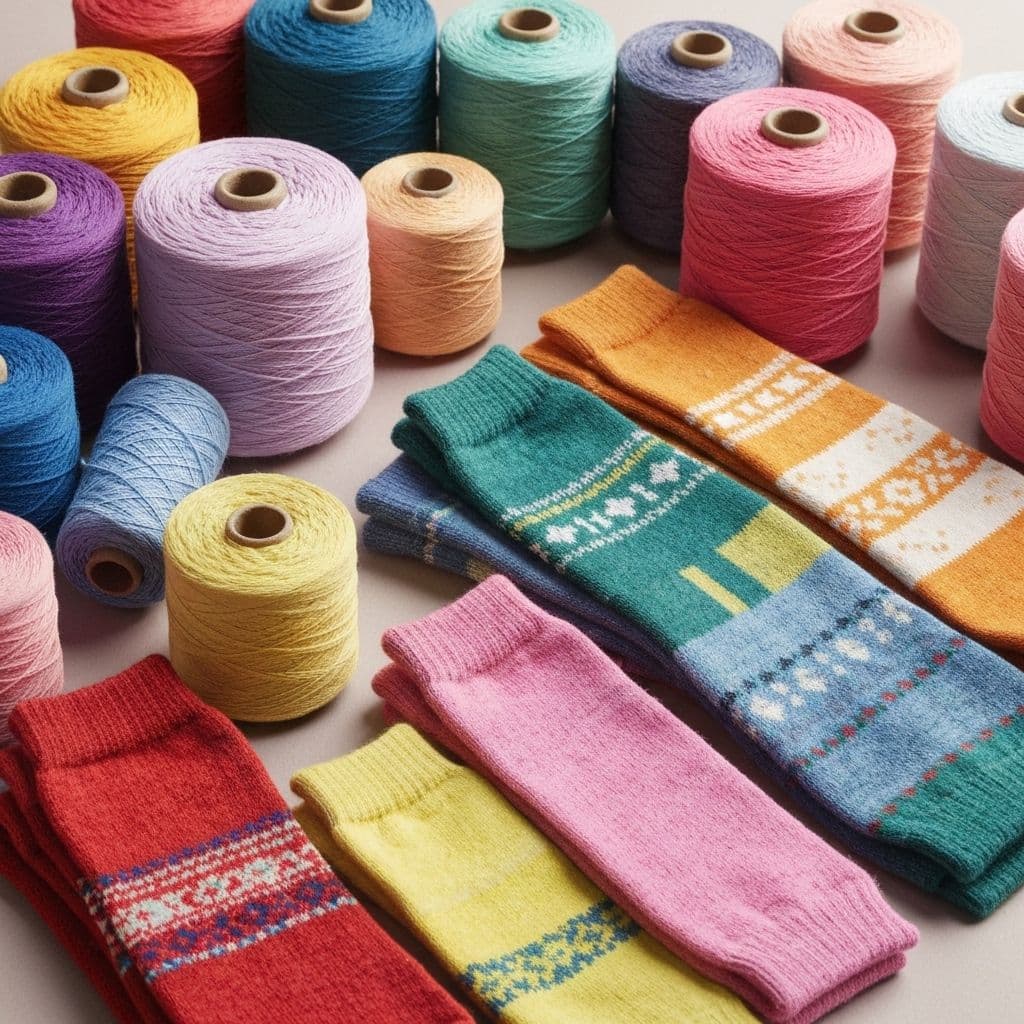
The material composition of socks directly impacts their comfort, durability, performance, and price point. Understanding the properties of different fibers and blends enables wholesale buyers to select materials that align with their target market and product positioning.
Cotton: The Classic Choice
Cotton remains the most popular sock material worldwide, valued for its natural softness, breathability, and affordability. However, not all cotton is created equal, and understanding the different grades is essential for quality sourcing.
Cotton Varieties:
- Combed Cotton: Standard quality with short fibers removed, offering good softness and durability
- Pima Cotton: Extra-long staple cotton with superior softness and strength
- Supima Cotton: Premium American-grown Pima cotton with exceptional quality
- Organic Cotton: Grown without pesticides, appealing to eco-conscious consumers
Pure cotton socks (100% cotton) are rare in quality products because cotton lacks elasticity and moisture-wicking properties. Most "cotton socks" actually contain 70-85% cotton blended with synthetic fibers for improved performance and fit.
Typical Cotton Blend: 80% Combed Cotton, 17% Polyester, 3% Spandex
This blend maintains cotton's natural feel while adding stretch, shape retention, and faster drying times. Cotton socks are ideal for casual wear, dress socks, and everyday comfort applications.
Polyester: Performance and Durability
Polyester is a synthetic fiber that excels in moisture management, quick drying, and color retention. While it lacks the natural softness of cotton, modern polyester yarns have significantly improved in comfort and hand feel.
Polyester Advantages:
- Excellent moisture-wicking properties
- Fast drying time (3-4x faster than cotton)
- Superior color fastness and print quality
- High durability and abrasion resistance
- Lower cost compared to natural fibers
Athletic and performance socks typically feature high polyester content (60-80%) combined with nylon for strength and spandex for stretch. Polyester is also the primary material for sublimation printing, enabling full-color custom designs.
Performance Sock Blend: 65% Polyester, 30% Nylon, 5% Spandex
Nylon: Strength and Elasticity
Nylon adds exceptional strength, elasticity, and abrasion resistance to sock blends. It's particularly important in high-wear areas like heels and toes, where durability is critical.
Nylon Applications:
- Reinforcement in heel and toe areas
- Sheer and dress sock construction
- Athletic socks requiring durability
- Compression socks needing strong elastic properties
Nylon content typically ranges from 10-40% in sock blends. Higher nylon content increases durability but may reduce breathability. Premium dress socks often use fine-gauge nylon for a smooth, lustrous finish.
Merino Wool: Premium Natural Performance
Merino wool has revolutionized the sock industry with its unique combination of natural performance properties. Unlike traditional wool, Merino is soft, non-itchy, and suitable for year-round wear.
Merino Wool Benefits:
- Natural temperature regulation (warm in winter, cool in summer)
- Excellent moisture management without feeling wet
- Natural odor resistance (can be worn multiple days)
- Soft, comfortable feel against skin
- Sustainable and biodegradable
Merino wool socks command premium prices but offer exceptional value for outdoor, hiking, and performance applications. Most Merino socks blend 50-70% wool with nylon and spandex for durability and fit.
Premium Merino Blend: 60% Merino Wool, 37% Nylon, 3% Spandex
The wool content is measured in microns. Finer microns (17-19) are softer and more expensive, while coarser microns (21-24) are more durable and affordable.
Bamboo: Eco-Friendly Alternative
Bamboo fiber (technically bamboo viscose or rayon) has gained popularity as a sustainable alternative to cotton. It offers natural antimicrobial properties and exceptional softness.
Bamboo Characteristics:
- Silky-soft texture, often compared to cashmere
- Natural antibacterial and odor-resistant properties
- Highly absorbent and breathable
- Sustainable and fast-growing resource
- Hypoallergenic and gentle on sensitive skin
Bamboo socks typically contain 70-80% bamboo fiber blended with nylon and spandex. They're ideal for eco-conscious brands and consumers seeking natural alternatives to synthetic materials.
Spandex/Elastane: The Essential Stretch Component
While not a primary material, spandex (also called elastane or Lycra) is crucial for sock fit and performance. Even small amounts (2-5%) dramatically improve comfort and shape retention.
Spandex Functions:
- Provides stretch and recovery for comfortable fit
- Prevents sagging and slipping during wear
- Enables compression and support features
- Maintains shape after washing
Athletic and compression socks may contain up to 10-15% spandex for enhanced support and performance. However, excessive spandex can reduce breathability and increase cost.
Specialty Performance Fibers
Advanced sock manufacturing incorporates specialized fibers for specific performance benefits:
- Coolmax: Polyester fiber engineered for superior moisture wicking
- Thermolite: Hollow-core fiber providing warmth without bulk
- X-Static Silver: Silver-coated nylon for antimicrobial properties
- Cordura: Ultra-durable nylon for extreme wear resistance
These specialty fibers increase costs by 20-50% but provide measurable performance advantages for premium product lines.
Material Selection Guide by Application
Everyday Casual Socks: 75-85% Cotton, 12-20% Polyester, 3-5% Spandex
Athletic/Performance Socks: 60-70% Polyester, 25-35% Nylon, 5-10% Spandex
Dress Socks: 70-80% Cotton or Bamboo, 15-25% Nylon, 3-5% Spandex
Outdoor/Hiking Socks: 50-70% Merino Wool, 27-45% Nylon, 3-5% Spandex
Compression Socks: 70-80% Nylon, 10-20% Spandex, 5-10% Polyester
Cost Considerations
Material costs significantly impact wholesale pricing. Understanding relative costs helps in product development and pricing strategies:
- Most Affordable: Polyester, Standard Cotton
- Mid-Range: Combed Cotton, Nylon, Bamboo
- Premium: Pima/Supima Cotton, Merino Wool, Specialty Performance Fibers
Material costs typically represent 30-40% of total manufacturing costs, making them a critical factor in product positioning and profitability.
Conclusion
Selecting the right sock materials requires balancing performance requirements, target market preferences, and cost constraints. The most successful sock lines often offer multiple material options to serve different customer segments and price points.
At VelonSocks, we source premium yarns from certified suppliers and can recommend optimal material blends based on your specific needs. Our material library includes over 50 different yarn options, and we provide physical samples to help you make confident sourcing decisions.